Why Big Tech Is Investing Billions in Energy and Data Centers ?

Big Tech companies like Google, Microsoft, Amazon, and Meta are pouring tens of billions into energy infrastructure and data centers to fuel the AI revolution. This massive spending addresses surging computational demands while tackling power shortages and sustainability goals.
Tech giants have pledged over $600 billion for AI-related infrastructure through 2030, with data centers claiming the lion's share. Microsoft alone plans $80 billion in 2025 for AI-enabled facilities. Amazon Web Services and Google Cloud are expanding globally, from Sweden to India, to secure capacity ahead of rivals.
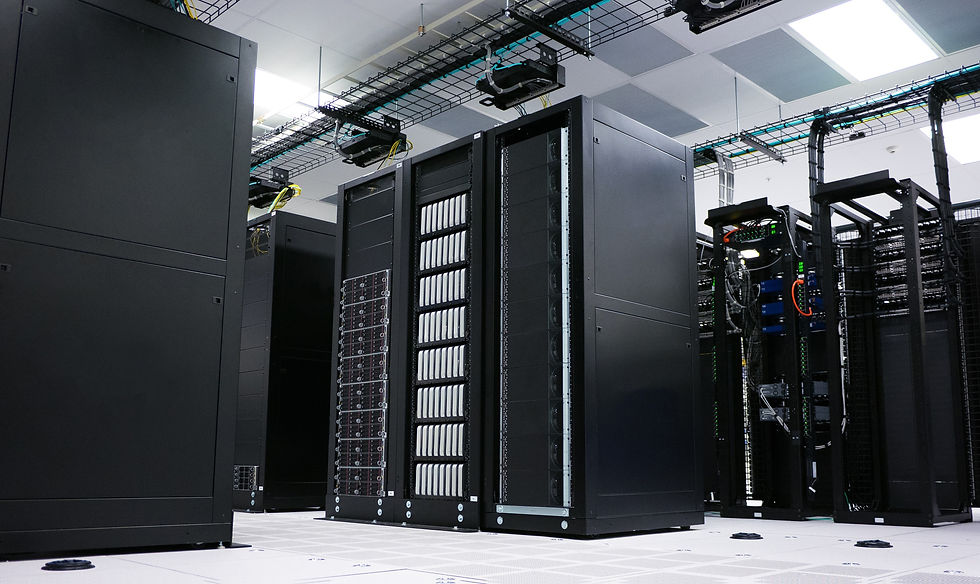
Investments target not just new sites but upgrades like liquid cooling systems, which cut energy use by 30-40% per server. Despite low utilization rates often 12-18% companies prioritize overbuilding to avoid bottlenecks, even if it means idle servers costing billions yearly.
The AI-Driven Data Center Boom
Explosive Growth in AI Workloads
Artificial intelligence, especially generative models, requires unprecedented computing power for training and inference. A single large language model can consume energy equivalent to thousands of households during development. Big Tech is building hyperscale data centers massive facilities with hundreds of thousands of servers to handle this scale.
Projections for Power Demand
Data center electricity use in the U.S. is set to rise from about 50 gigawatts today to over 130 gigawatts by 2030. Globally, this could triple to nearly 3,000 terawatt-hours annually, rivaling the power needs of entire countries like Japan. AI workloads alone may boost total consumption by 20-40% above earlier forecasts by 2028.
Year | U.S. Data Center Power Demand (GW) | Global Energy Use (TWh) |
2023 | 50 | 1,000 |
2025 | 62 | 1,500 |
2030 | 134 | 3,000 |
Edge in the AI Arms Race
Owning data centers lets firms like Meta train models in-house, slashing costs and boosting speed over rented capacity. Cloud arms Azure, AWS, Google Cloud monetize this via AI services, attracting enterprises wary of privacy risks. It's a moat against startups and rivals.
Boost to Broader Economy
These investments inject billions into construction, chipmaking, and energy sectors, lifting U.S. GDP. Goldman Sachs equates added demand to a top-10 global power user emerging online. Jobs in cooling tech and transmission lines proliferate, though rural areas bear grid upgrade costs.
The Energy Crunch Challenge
Grid Strain and Reliability Gaps
Traditional grids can't keep pace; data centers need 24/7 power, but renewables like solar and wind are intermittent. In the U.S., utilities forecast 22% growth in data center supply this year, yet delays in grid connections push firms toward self-reliance. Europe faces similar issues, with projects stalled by overloaded infrastructure.
Shift to Diverse Energy Sources
Big Tech's "all-of-the-above" approach mixes renewables, gas, and nuclear. Gas plants provide immediate baseload power, supplying most U.S. data centers today. Nuclear, including small modular reactors, offers carbon-free reliability, though deployment lags a decade behind needs.
Water and Waste Concerns
Cooling these behemoths guzzles municipal water up to 1.7 billion liters daily for one campus. Idle servers waste $30 billion yearly in power, prompting efficiency drives. Big Tech counters with recycled water and advanced chips from Nvidia.
Innovation on the Horizon
Expect small modular reactors by 2035 and fusion pilots sooner. Grid-scale batteries and hydrogen could firm renewables. Yet $630 billion in planned AI spend risks shortfall if demand plateaus, per analysts.
Strategic Power Plays
Microsoft and Amazon are buying into nuclear plants, with deals for restarted reactors to power facilities off-grid. Google signed contracts for gas-fired electricity in late 2025 alongside clean sources. This secures supply amid urban blackouts from surging demand.
Historically, these firms led clean energy buys, with Google targeting 24/7 carbon-free power. Pledges include net-zero by 2030 for most, pushing wind, solar, and storage. Yet AI's pace forces hybrids: 100% renewables for some, backed by fossil fuels for others.
Energy Source | Share in U.S. Data Centers (2025) | Projected Growth by 2030 |
Gas | 50% | +30% |
Renewables | 30% | +50% |
Nuclear | 10% | +100% |
Other | 10% | Stable |
India's Emerging Role
India's market, valued at $5 billion, eyes $50 billion by 2030, with Mumbai, Chennai, and Ahmedabad hubs. Reliance and Adani partner Big Tech for hyperscalers, tapping 500 MW deals. Power needs hit 10 GW soon, spurring solar-nuclear hybrids suited to monsoon cycles.
Proximity to Big Tech aligns with PLI schemes for electronics. Gujarat's solar farms and upcoming reactors position Ahmedabad as a node, boosting exports and jobs. This mirrors global trends but leverages India's cheap renewables.
Conclusion
Big Tech's multibillion-dollar push into energy and data centers marks a pivotal shift, powering the AI era while redefining global infrastructure. Driven by explosive computational demands, companies like Microsoft, Google, Amazon, and Meta are not just building facilities, they're securing energy independence through nuclear restarts, gas backups, and renewable hybrids to meet 130+ GW U.S. needs by 2030.
This "all-of-the-above" strategy resolves grid strains, low utilization woes, and sustainability pledges, injecting trillions into economies and creating jobs worldwide. Yet challenges persist: water scarcity, idle server waste, and regulatory hurdles demand innovation in modular reactors and efficient cooling.
For India, this boom elevates hubs like Ahmedabad, aligning with PLI schemes and green energy goals for a $50 billion market. Ultimately, these investments cement Big Tech's AI dominance, boost GDP, and pave a resilient path forward balancing voracious power hunger with cleaner, smarter grids for tomorrow's digital world



Comments