Digital banking boom: How UPI, apps, and Neobanks are reshaping India’s banking map in 2026

Updated: May 6
India’s banking landscape is no longer defined by brick‑and‑mortar branches, chequebooks, and long queues. In 2026, the country’s financial map is being redrawn by a digital‑first ecosystem built on Unified Payments Interface (UPI), mobile banking apps, and a fast‑growing breed of neobanks. The result is a more inclusive, faster, and more personalized banking experience that now touches over a billion Indians, from metro‑centric professionals to Tier‑3 and rural households.
UPI: The engine of India’s digital money revolution
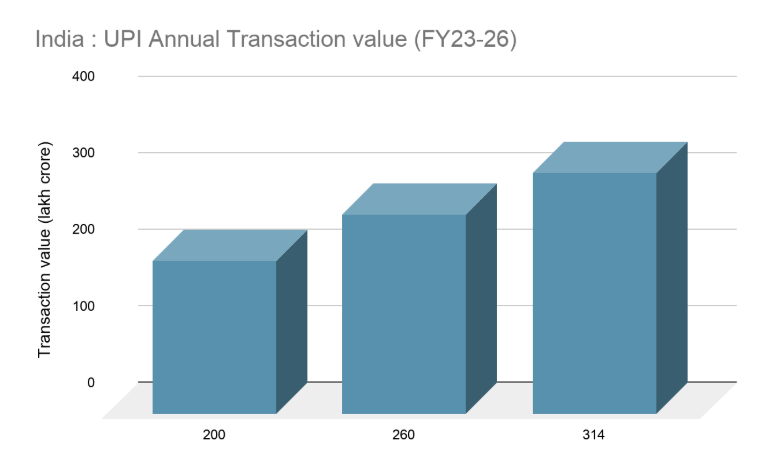
At the heart of this transformation sits UPI. Launched in 2016, UPI has evolved from a payments interface into the default plumbing of India’s retail economy. By the end of the 2025‑26 financial year, UPI transaction value crossed ₹314 lakh crore, up around 21 percent from the previous year, while annual transaction volumes surged to roughly 242 billion.
In March 2026 alone, UPI processed around 22.6 billion transactions worth close to ₹29.5 lakh crore, marking the highest monthly value and volume on record. This implies roughly 730 million transactions shifting money every day, with an average daily value of over ₹95,000 crore. UPI now accounts for about 85 percent of India’s total digital transaction volume, underscoring how deeply embedded it has become in daily life.
How UPI is reshaping behaviour and geography
read of digital payments. While metros such as Bengaluru, Delhi, Mumbai, and Hyderabad continue to lead in per‑capita transaction intensity, Tier‑2 and Tier‑3 towns are the real growth engines. Many “Bharat” consumption cycles include kirana shops, local transport, school fees, and small‑ticket vendor payments now run largely on UPI, reducing dependence on cash and enabling better financial tracking for both merchants and households.
The app‑centric banking experience
In 2026, the smartphone will be the primary banking interface for a majority of Indians. Public‑sector, private, and foreign banks have all doubled down on their mobile apps, adding features such as instant e‑KYC onboarding, video KYC, paperless account opening, and one‑tap credit lines. Many apps now integrate personal finance dashboards, spending analytics, automated savings goals, and basic investment options, turning a simple banking app into a mini‑wealth‑management platform.
Several banks have also launched “neobank‑style” sub‑apps or digital‑only brands to attract younger users without the baggage of legacy systems. These interfaces are designed explicitly for thumb‑driven navigation, with minimal jargon, chat‑based customer support, and contextual nudges (for example, alerts before an EMF bill payment or automated round‑up savings). The effect is that even a first‑time banked user in a small town can onboard, transact, and manage basics almost entirely through a phone, often without stepping into a branch.
Neobanks: The disruptors behind the scenes
Neobanks form another critical layer of this transformation. Technically, most Indian neobanks are not full‑stack banks but digital‑first fintech platforms that partner with licensed banks to offer current accounts, savings accounts, cards, and lending products. What sets them apart is their user‑experience‑first design, powered by AI‑driven analytics, cloud infrastructure, and API‑first architecture.
Typical features include:
Instant account opening with minimal paperwork, often in under 10 minutes.
Real‑time transaction alerts, expense categorisation, and basic budgeting tools.
Automated savings “round‑ups”, goal‑based savings, and gamified financial nudges.
Embedded lending and credit scores, often used by small businesses and freelancers.
Industry estimates suggest India’s neobank user base has grown from roughly 6 million in 2021 to about 40 million in 2025, with projections of around 60 million by 2027. This implies a tenfold expansion in six years, reflecting rapidly rising trust in digital‑only financial providers, especially among urban millennials, gig‑economy workers, and micro‑MSMEs.
UPI vs Neobanks vs traditional apps: A quick snapshot
To understand how these players sit together, consider the following high‑level view of their roles and traits in 2026.
Aspect | UPI (payment layer) | Traditional bank apps | Neobanks (digital‑first) |
Primary role | Instant interoperable payments between accounts | Core banking: accounts, deposits, loans, statements | Embedded, user‑experience‑heavy banking and finance tools |
Underlying provider | NPCI‑backed rails, multiple banks and apps | Individual bank’s balance sheet and IT stack | Partner bank + fintech platform |
Typical user journey | Scan QR or enter UPI ID to send/receive money | Open account, apply for loans, track statements | Instant onboarding, in‑app budgeting, and credit tools |
Key differentiator | Ubiquity, speed, low cost, 24x7, interoperability | Regulatory trust, branch support, legacy processes | UX polish, AI‑driven insights, speed, and personalisation |
Growth driver | Mass adoption across urban and rural India | Regulatory compliance, large customer base, deposits | Young, tech‑savvy cohorts and MSMEs |
Neobanks and mobile apps increasingly sit on top of UPI rails, using them as the default settlement layer while layering value‑added services such as credit, savings nudges, and analytics. This “stacked” model allows traditional banks to retain regulatory and balance‑sheet control, while neobanks and fintech apps capture the front‑end user relationship.
Financial inclusion and the “second‑order” impact
Beyond convenience, digital banking in 2026 is significantly broadening financial inclusion. India’s digital‑public‑infrastructure trio Aadhaar, UPI, and GSTN has created a low‑friction ecosystem that allows new users to open accounts, receive direct transfers, and make payments with minimal paperwork. Many small vendors, kirana stores, and rural service providers now have bank accounts or digital‑only balances simply because UPI onboarding is frictionless.
Shifting from a cash‑heavy to a digital‑first economy also generates rich transaction data that can be used to build credit profiles for the “thin‑file” or “no‑file” population. Neobanks and fintech lenders increasingly use transaction histories, cash‑flow patterns, and UPI‑based spending to offer microloans, working‑capital lines, and merchant credit, often to small businesses and self‑employed individuals underserved by traditional banks.
The role of AI and data‑driven banking
A subtle but powerful shift in 2026 is the embedding of artificial intelligence into everyday banking. Many neobanks and fintech‑enabled apps now use AI models to:
Auto‑categorise spending into food, travel, utilities, and entertainment.
Flag unusual or potentially fraudulent transactions in real time.
Offer dynamic savings goals based on incoming cash‑flow and spending patterns.
Provide personalised product recommendations, such as a small business loan when revenue spikes are detected.
Traditional banks are also integrating AI, but often at a slower pace due to legacy systems and organisational inertia. Even so, basic AI‑driven chatbots, automated complaint routing, and risk‑scoring engines are becoming standard, reducing the cost of serving mass‑market customers and enabling more proactive fraud‑prevention mechanisms.
Regulatory balance: Innovation versus stability
The Reserve Bank of India and the government have generally supported this digital banking boom, but they are also tightening the regulatory leash. Recent directives have clarified that neobanks cannot operate as standalone banks; they must partner with licensed entities and cannot hold deposits directly. At the same time, regulators have tightened norms around data privacy, grievance redressal, and digital‑lending practices to prevent predatory behaviour and ensure that rapid growth does not undermine systemic stability.
UPI itself is evolving under a more nuanced regulatory framework. Measures such as UPI Lite, transaction‑value caps on certain categories, and stronger KYC norms for higher‑value payments aim to balance convenience with security. The RBI is also nudging banks and fintechs to improve fraud‑detection algorithms and to provide clearer consumer‑education content inside apps, so that digital‑first users are not blindsided by scams or mis‑use of credentials.
Changing economics of banking
Digital‑first banking is quietly reshaping the economics of financial services. Traditional banks spend heavily on branches, ATMs, and manpower, whereas neobanks and digital‑only brands operate with far lower overheads. This allows them to offer:
Lower or no‑fee account maintenance.
Cheaper or zero‑cost interbank transfers.
More competitive interest‑rate structures or higher‑yield savings products.
However, the low‑fee model is not free for banks. As more transaction revenue migrates from card‑based networks to UPI, banks must compensate by monetising value‑added services such as credit products, insurance, wealth management, and small‑business banking rather than relying on interchange. The “product” layer is therefore becoming more important than the “pipeline” layer in the banking value chain.
Consumer behaviour and expectations in 2026
Indian consumers in 2026 expect banking to be:
Instant: Onboarding, payments, and grievance redressal should happen in minutes, not days.
Invisible: Banking should fit into everyday workflows shopping, rent, travel, and subscriptions without additional steps.
Personal: Apps should understand their spending patterns, income cycles, and risk profiles, and nudge them accordingly.
This has forced even large public‑sector banks to overhaul their apps, reduce OTPs and authentication steps, and invest in better UI‑UX. The competition is no longer just between banks, but between banks and super‑apps, neobanks, and fintech platforms that bundle banking with commerce, travel, and entertainment.
Challenges and risks on the horizon
Despite the optimism, the digital‑banking boom is not without risks. Cybersecurity incidents, phishing attacks, SIM‑swap frauds, and unauthorised UPI auto‑debit registrations have grown alongside adoption. Many users still struggle to differentiate between genuine bank‑branded apps and spoofed versions, and financial‑literacy gaps remain significant, especially in rural and semi‑urban pockets.
Privacy is another concern. The very data that enables personalised services can also be misused if governance frameworks are weak. Indian regulators are still refining rules around data consent, cross‑selling, and profiling, and how this plays out will shape whether India’s digital banking ecosystem becomes a model of inclusive innovation or a breeding ground for exploitation.
The road ahead for India’s banking map
Looking forward, India’s banking map in 2026 and beyond will likely be defined by three overlapping layers:
UPI and other public digital‑infrastructure rails that ensure low‑cost, interoperable payments.
Traditional banks that retain balance‑sheet strength, regulatory trust, and access to large‑scale credit.
Digital‑first neobanks and fintech platforms that dominate the user‑experience, analytics, and micro‑product layer.
In this hybrid model, the physical branch network will continue to exist, but its role will shrink to servicing complex transactions, high‑value customers, and advisory services. For the majority of Indians, the primary “bank” will be an app that sits on UPI, powered by a backend bank, and enriched by AI‑driven insights from a neobank‑style engine.
Conclusion
India’s digital banking boom in 2026 is more than a technological upgrade; it is a fundamental rewiring of how millions manage money. UPI has become the invisible backbone of everyday transactions, while mobile banking apps and neobanks have redefined expectations around speed, convenience, and personalisation. The physical branch is giving way to the smartphone screen, and financial inclusion is no longer limited to those who can walk into a bank.
However, this transformation brings new challenges. Cyber threats, data privacy concerns, and uneven financial literacy mean that growth must be balanced with robust safeguards and consumer education. Regulators, banks, and fintech platforms will need to collaborate closely to ensure that innovation does not come at the cost of trust or stability.
Digital banking transformations align perfectly with Bizaay app features like 100% digital KYC, e-mandates, and tailored recommendations for mutual funds in fintech themes. From Surat, Gujarat Bizaay bridges everyday investors to PMS opportunities in banking tech, by connecting seamless digital wealth management to sector growth. Its low-entry SIPs make banking innovation accessible to all.



Comments